News, Perspectives — November 19, 2025
Designing with Country: Continuing our Journey
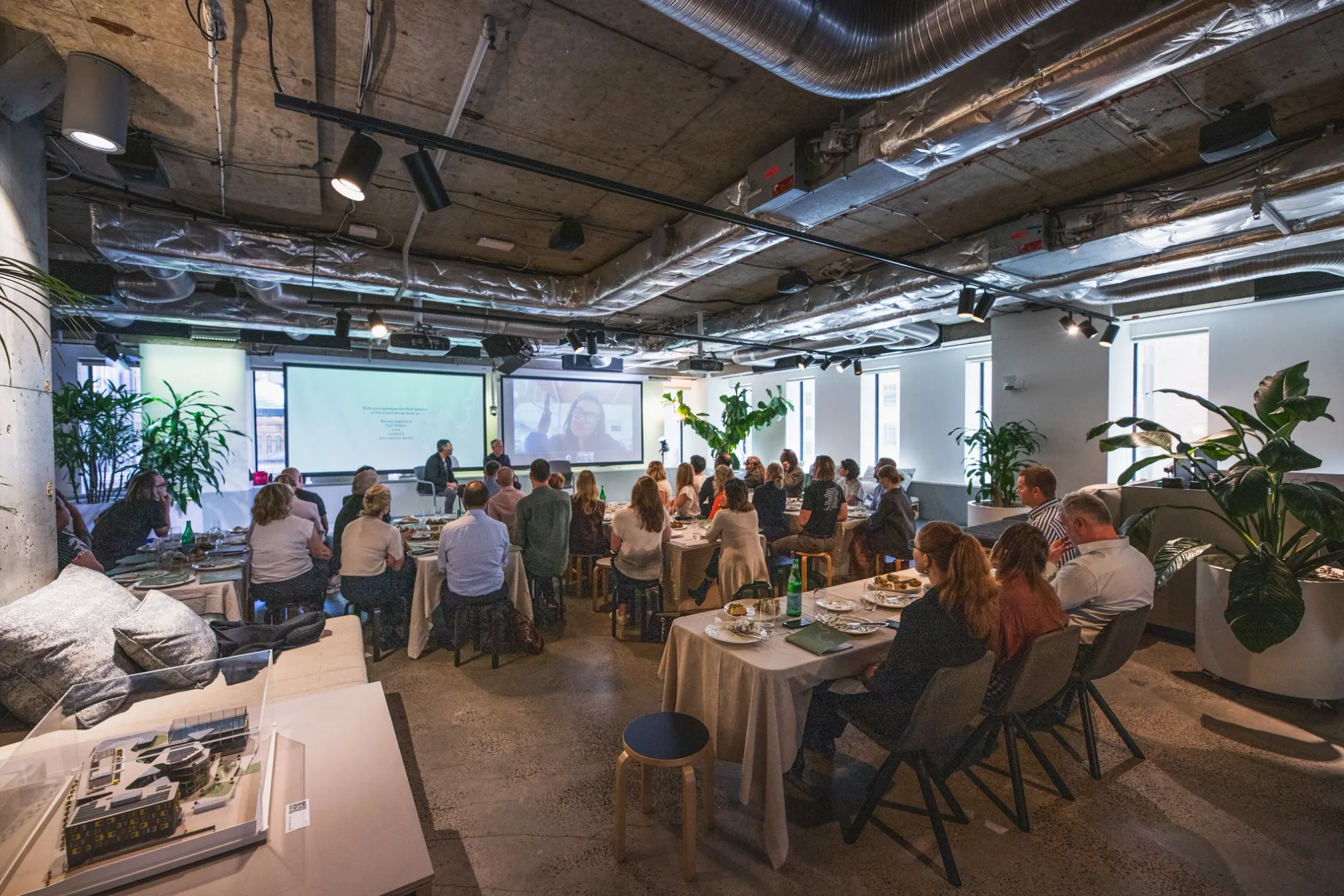
To explore our Designing with Country journey, exchange learnings with industry guests and share our 2025 handbooks in person, we gathered at our Sydney studio on Gadigal Country.
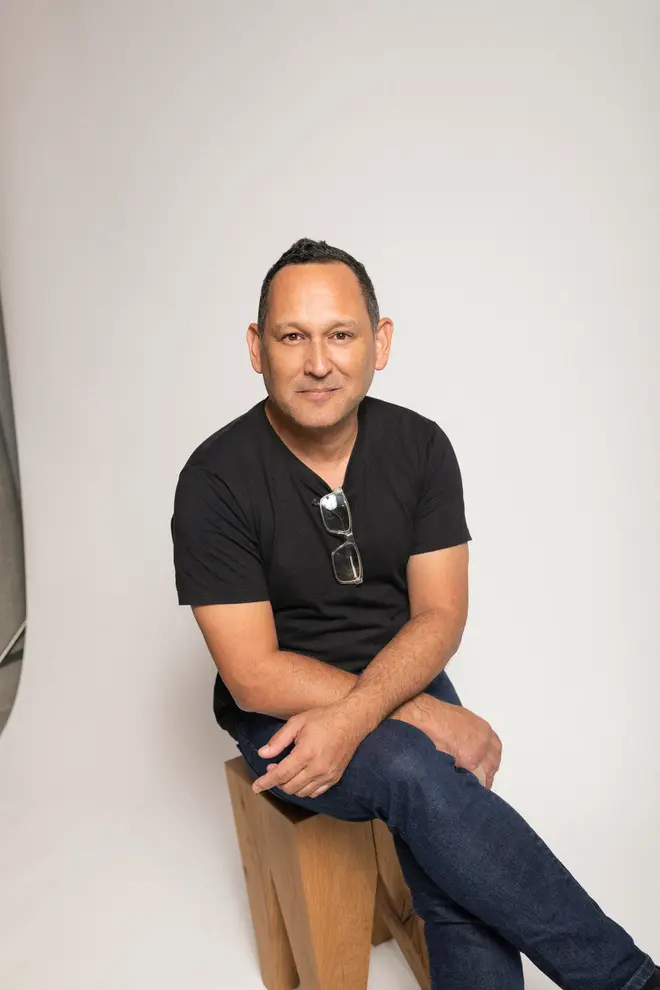
BVN Principal Kevin O’Brien
In our Designing with Country handbook, we chart the layers of influence 
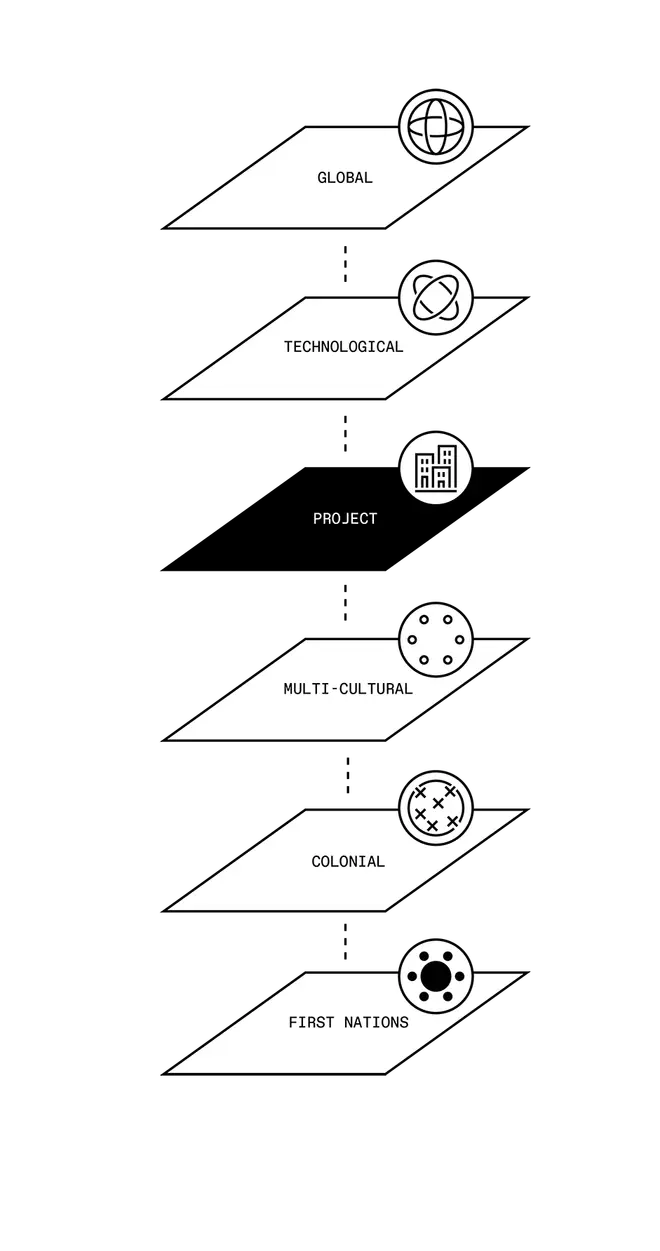
Place-making is the task that ties all the different layers of our histories and futures together — First Nations, colonial, multicultural, technological and global.
Kevin O’Brien, Principal BVN
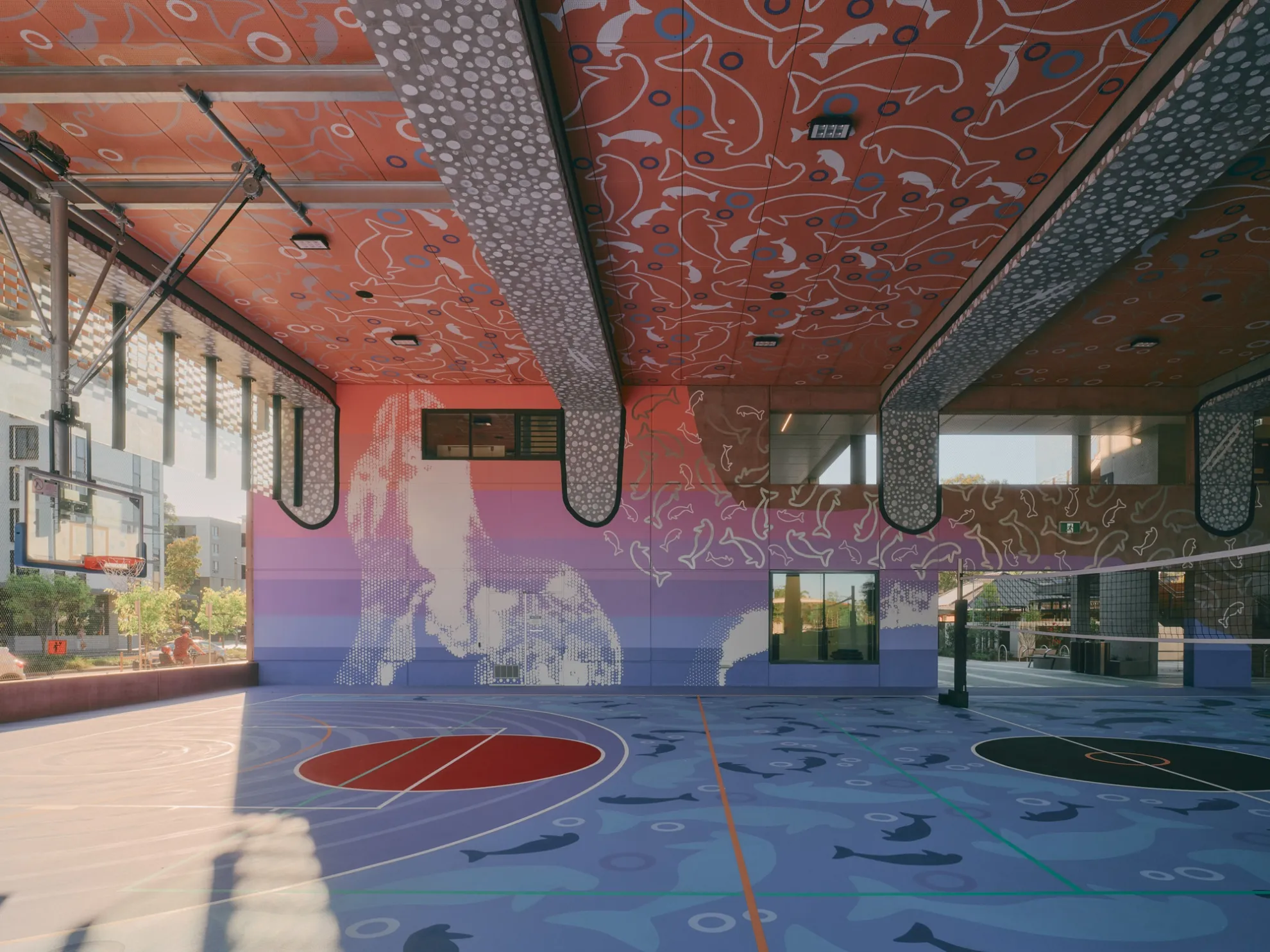
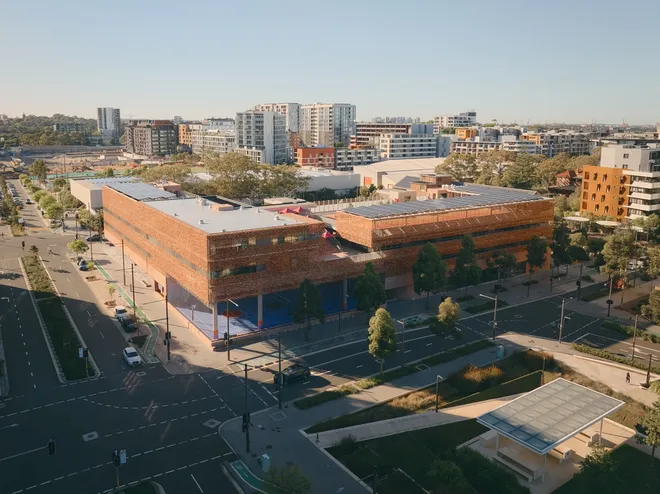
At Green Square Public School and Community Spaces, an immersive mural by Blak Douglas, titled The Belly of the Feast, enlivens the multipurpose court with First Nations storytelling.
A common challenge for designers, project managers, owners, and the broader industry is knowing who to consult with on Country. We consider First Nation Elders at the centre of the knowledge sphere and supporting them, Traditional Owners and the local Community. Beyond them, stakeholder communities, national communities and international communities may also inform the project.
Our panellist, Craig, believes that finding the right First Nations partner is similar to forming any other partnership. “I think you’ve got to do your research and get to know the Communities. If you wanted an engineer, for instance, you’d start looking at a few to understand who you want to work with. It’s the same in the Indigenous space.”
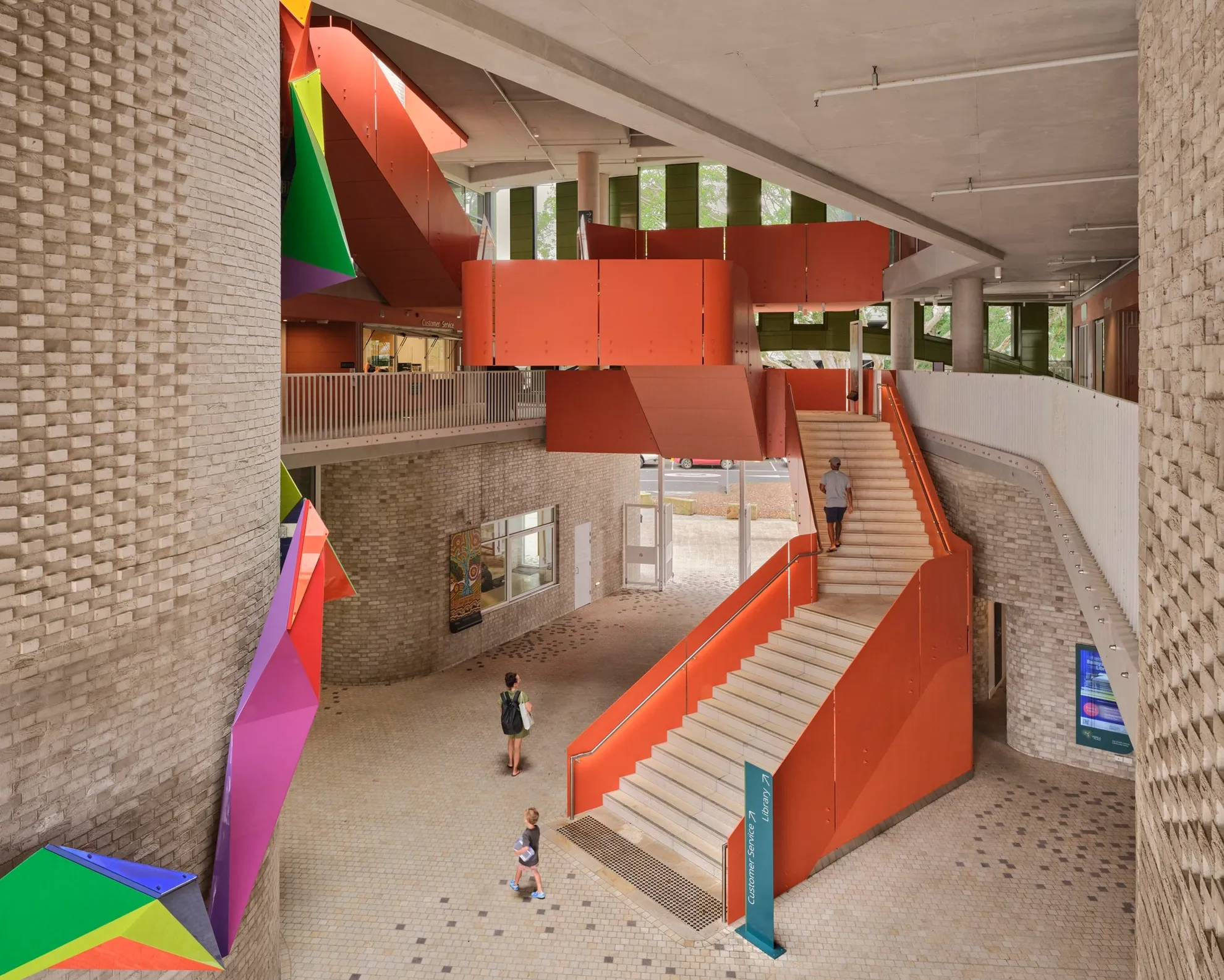
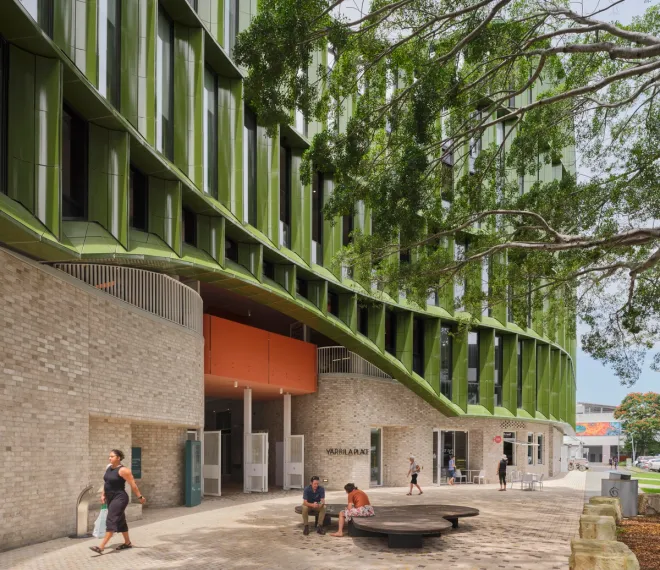
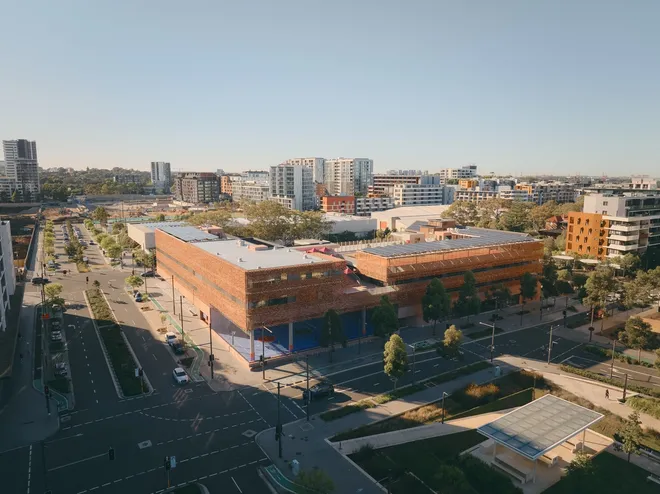
Yarrila Place knits together local council, community and cultural spaces into a vibrant civic hub on Gumbaynggirr Country. Inside, winding staircases of orange steel guide an ascending ‘track’, orienting views to culturally significant sites nominated by the six clans of the Gumbaynggirr People.
The indigenous story is not just about indigenous people. It's about how everyone can find identity and belonging.
Craig Kerslake, Director Nguluway Design Inc.
The act of contemporary ‘place-making’ often assumes that there was no ‘place’ to begin with. For First Nations Communities, this is incongruous with an understanding of Country that spans millennia. To tackle why First Nations Communities can contest this term, our panellist, Alison, explained, “Placemaking is about considering how places welcome new Australians, First Nations people, and everyone living, working, and thriving in that place. It's about looking at it through a different lens and decolonising it, and saying, OK, how do different cultures behave in these public spaces, and how can we design for them for the next thousand years?”
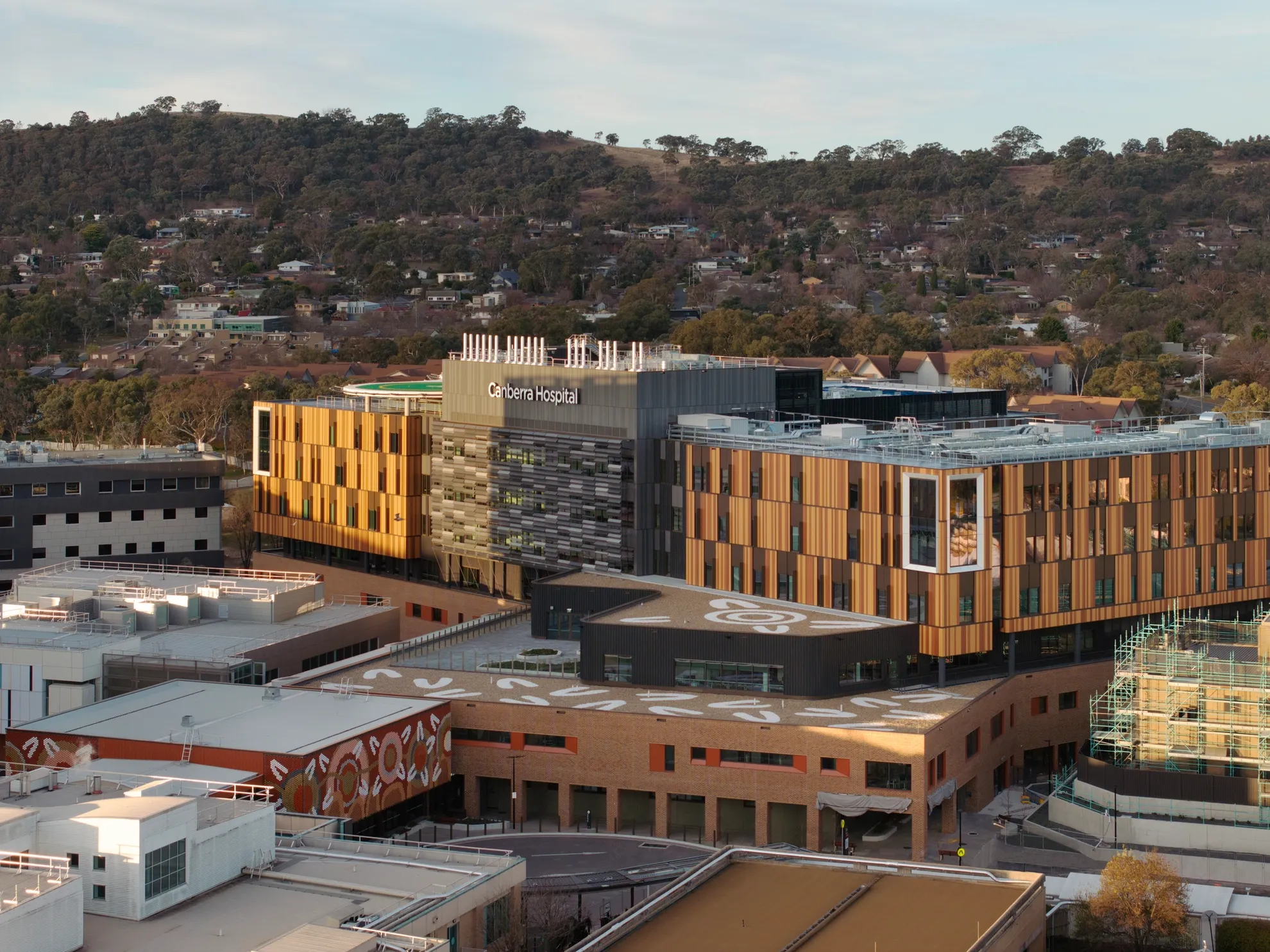
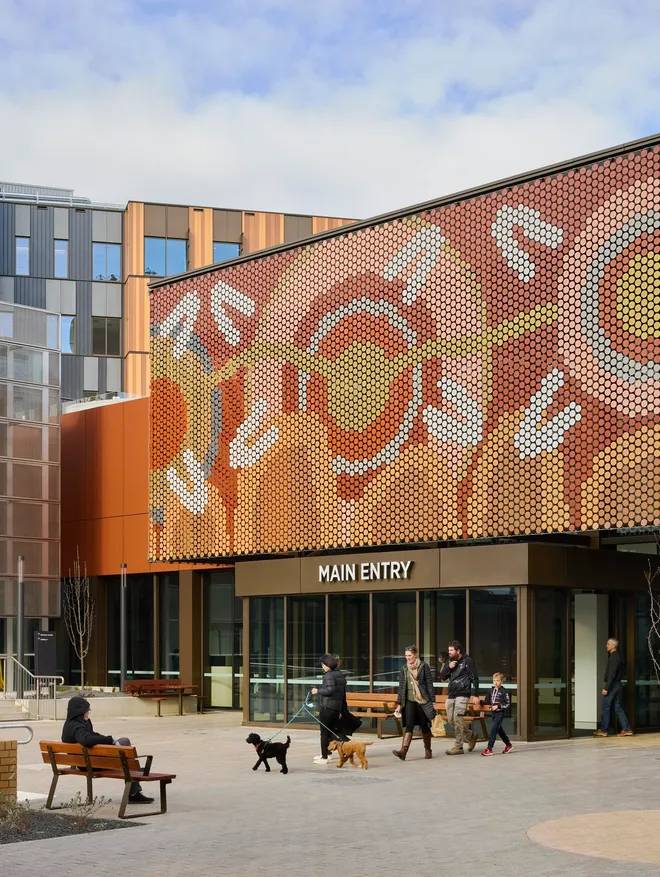
The Canberra Hospital Expansion weaves together First Nations artwork and spatial considerations to create a place that welcomes all.
Designing with Country is a cultural inheritance for all Australians. It will create some of the best cities in the world — unique cities that are built explicitly from Country.
Professor Alison Page, University of Technology Sydney
By cataloguing our understanding, process and recently completed projects, we hope to advance outcomes for First Nations Communities. Our commitment is a long-term journey, one that honours the past, strengthens the present and builds a shared future that respects and celebrates the oldest living cultures on earth.