Architecture
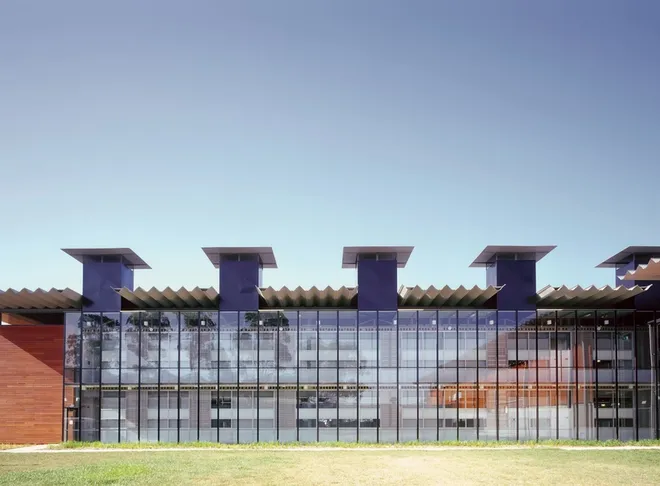
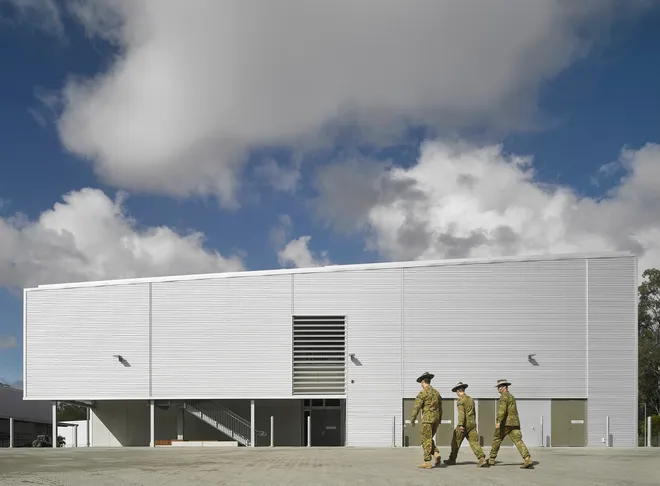
The ELF 2B project rationalised the Gallipoli Barracks in Brisbane while adding over 165 buildings to support its expansion into one of Australia’s largest army bases.
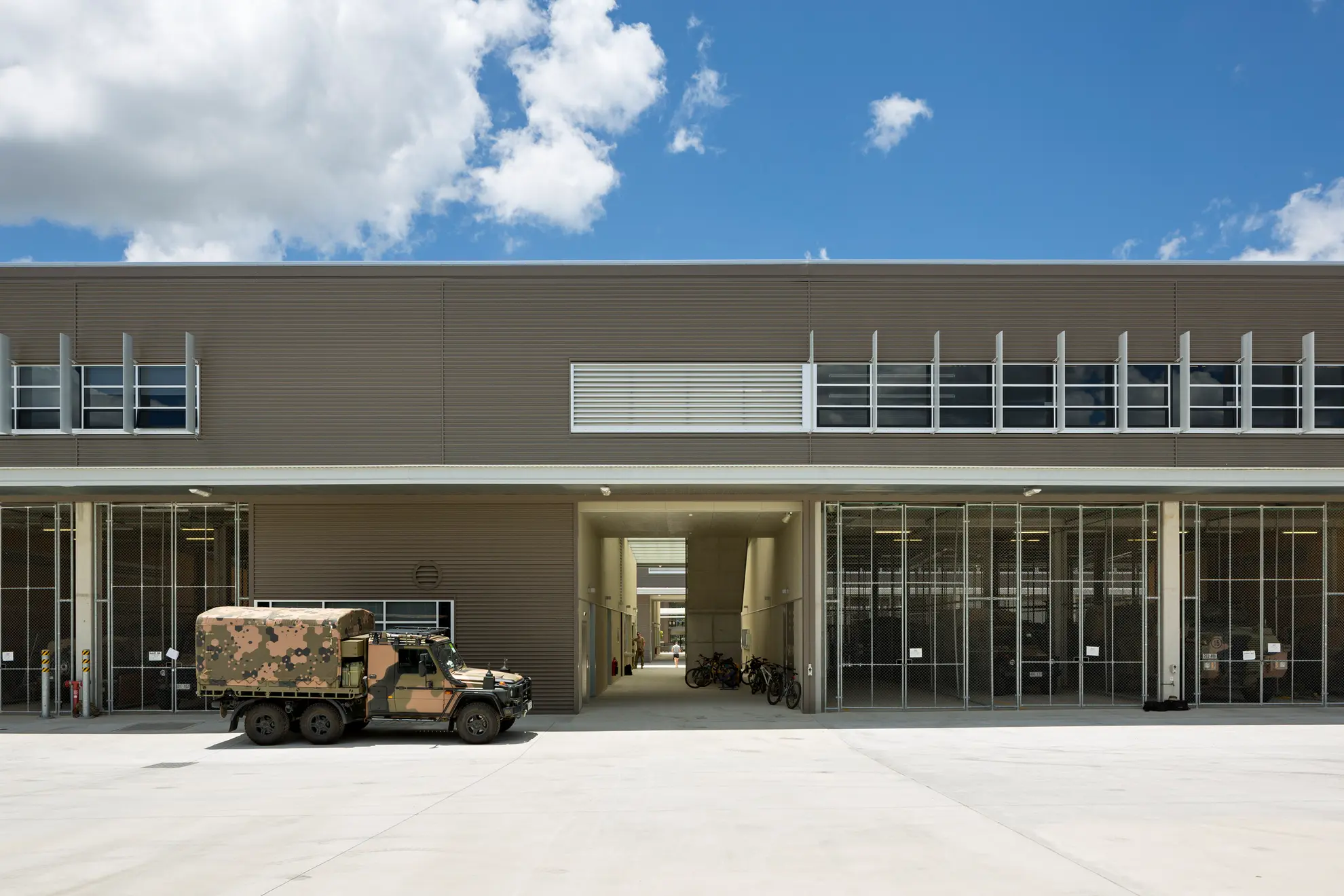
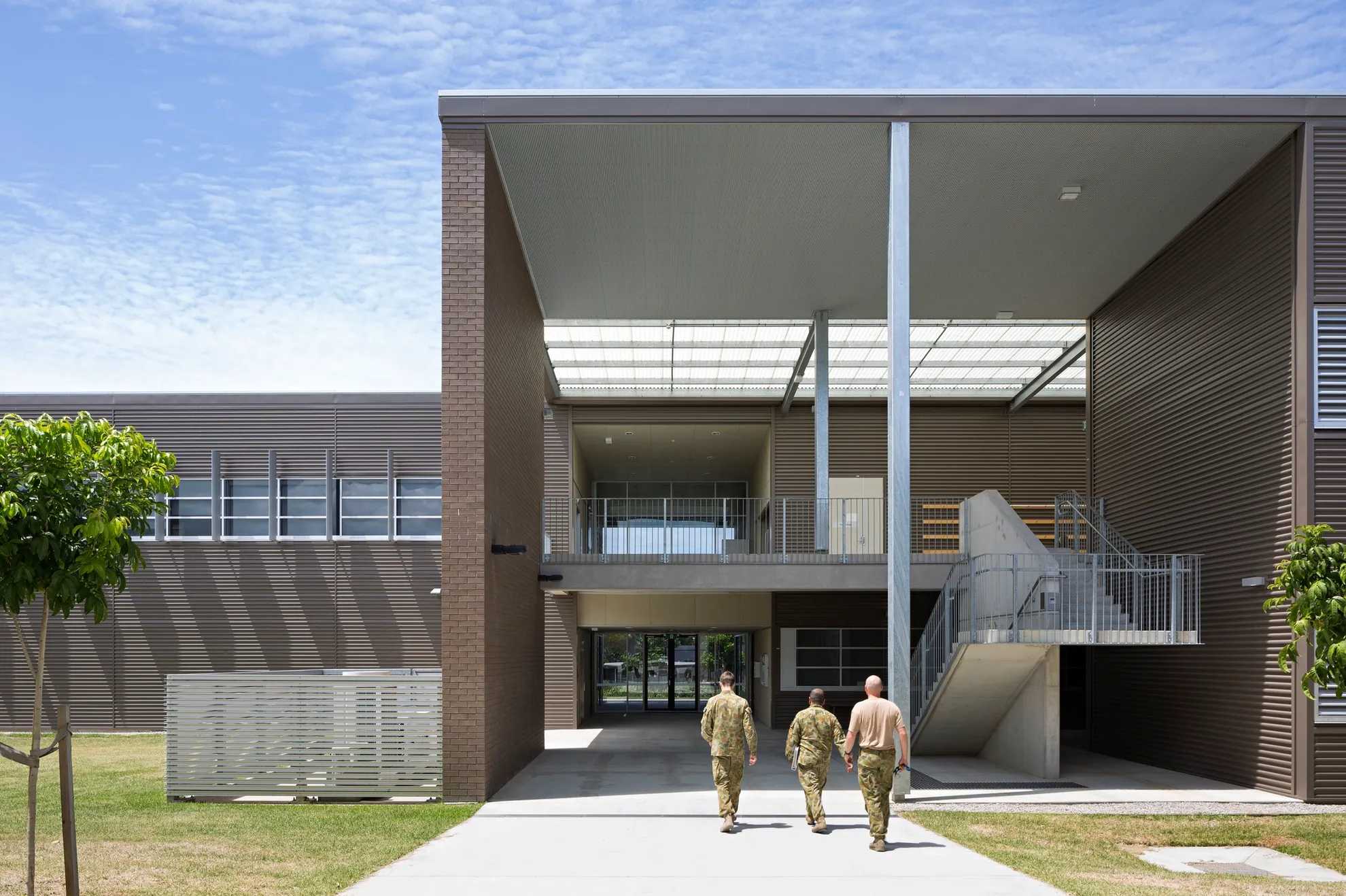
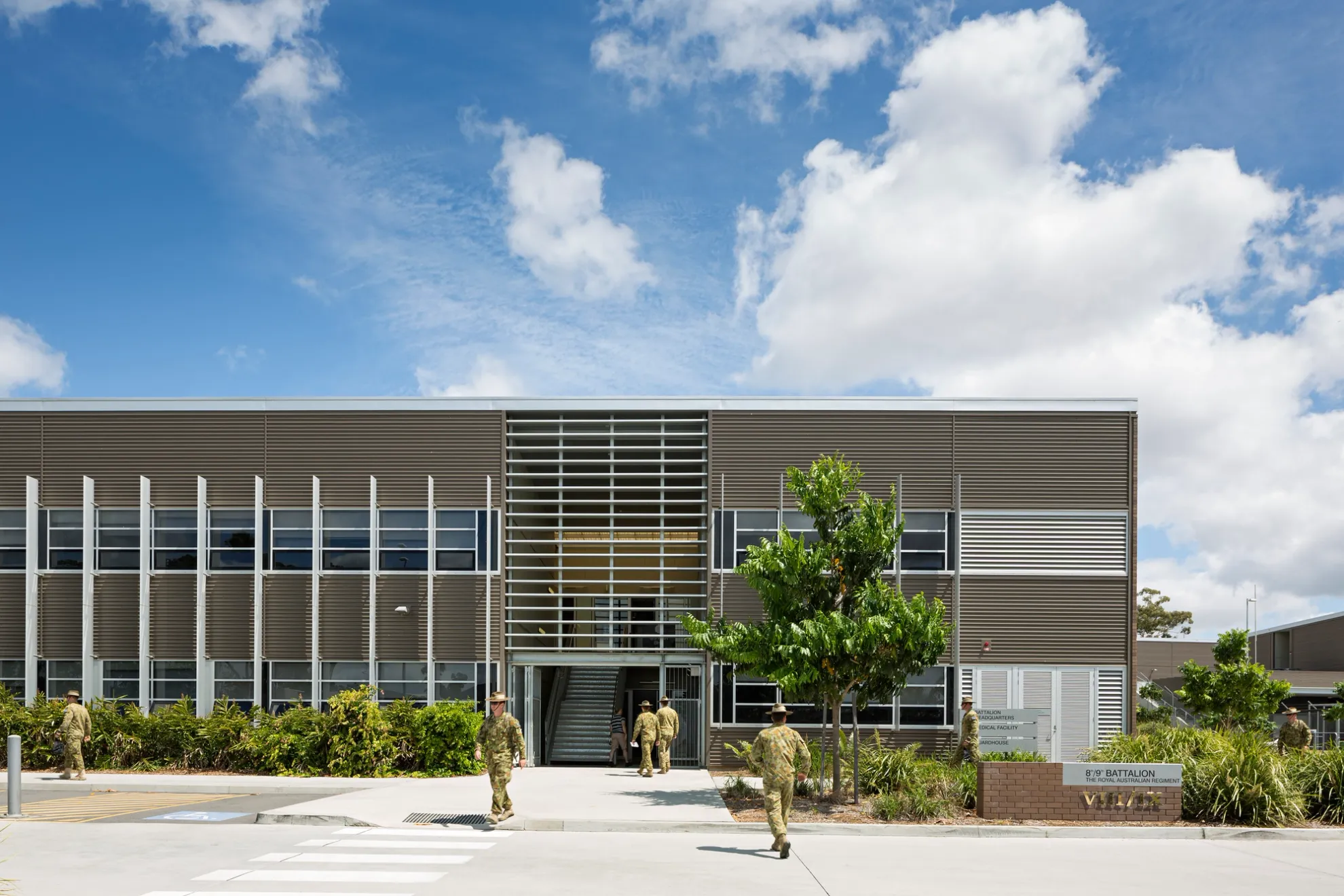
The Enhanced Land Force (ELF) project expanded the Australian Army by 3,000 personnel involving investment in 17 bases and training facilities across four states. Central to this initiative was the re-raising of the 8th/9th motorised infantry battalion, requiring a complete suite of buildings for over 600 personnel and their combat support vehicles at Gallipoli Barracks, Brisbane. The units at Enoggera include armoured, artillery, engineer, signals, infantry, medical and other combat service support units.
BVN and Conrad Gargett (now Architectus) undertook the project as a 50/50 joint venture.
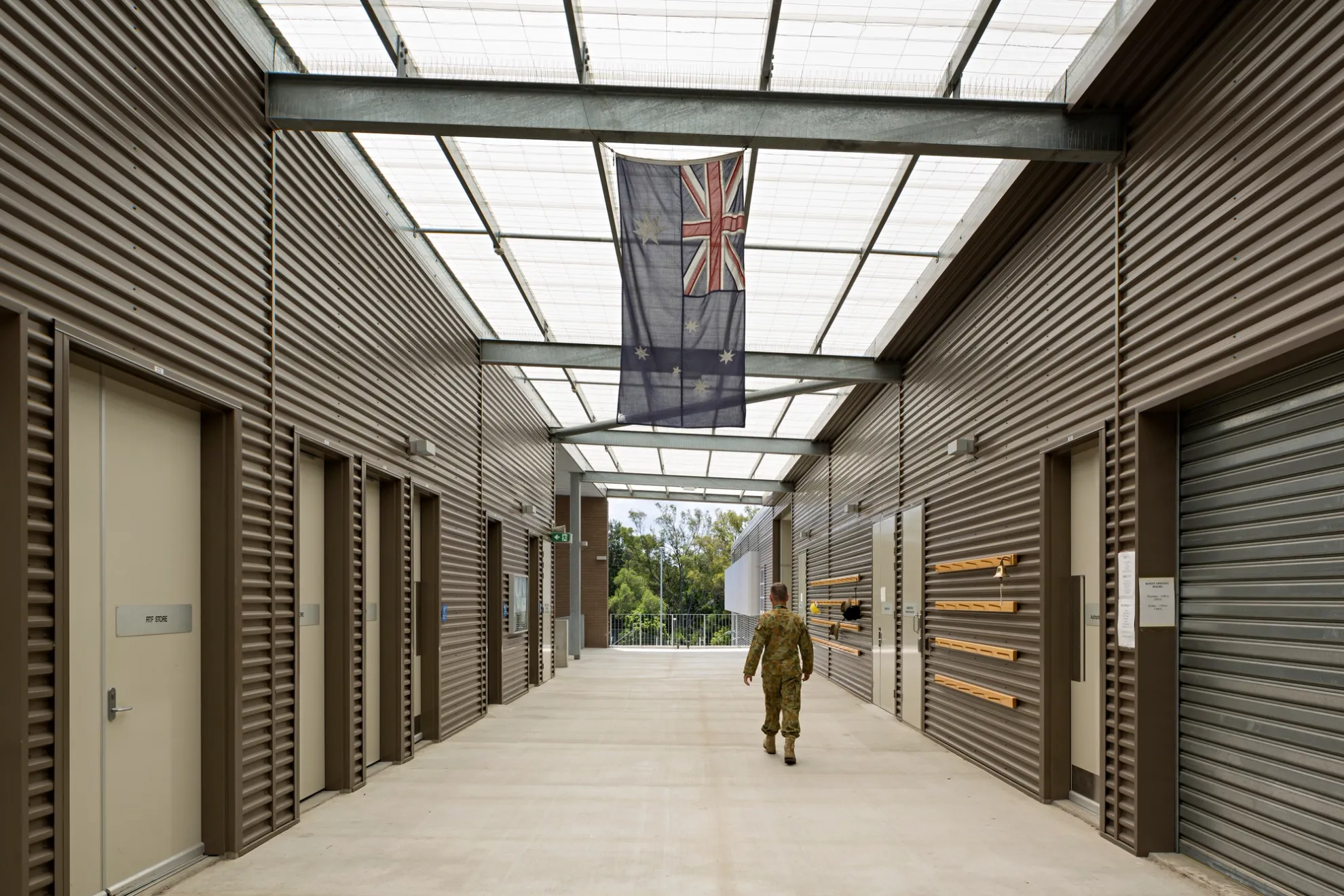
Part of our work was to develop solutions for the changing nature of the army, which is becoming increasingly mechanized and technologically sophisticated, and for the unique nature of the site itself, which is much closer to the city and with smaller land mass than other traditional bases.
David Kelly, Principal BVN
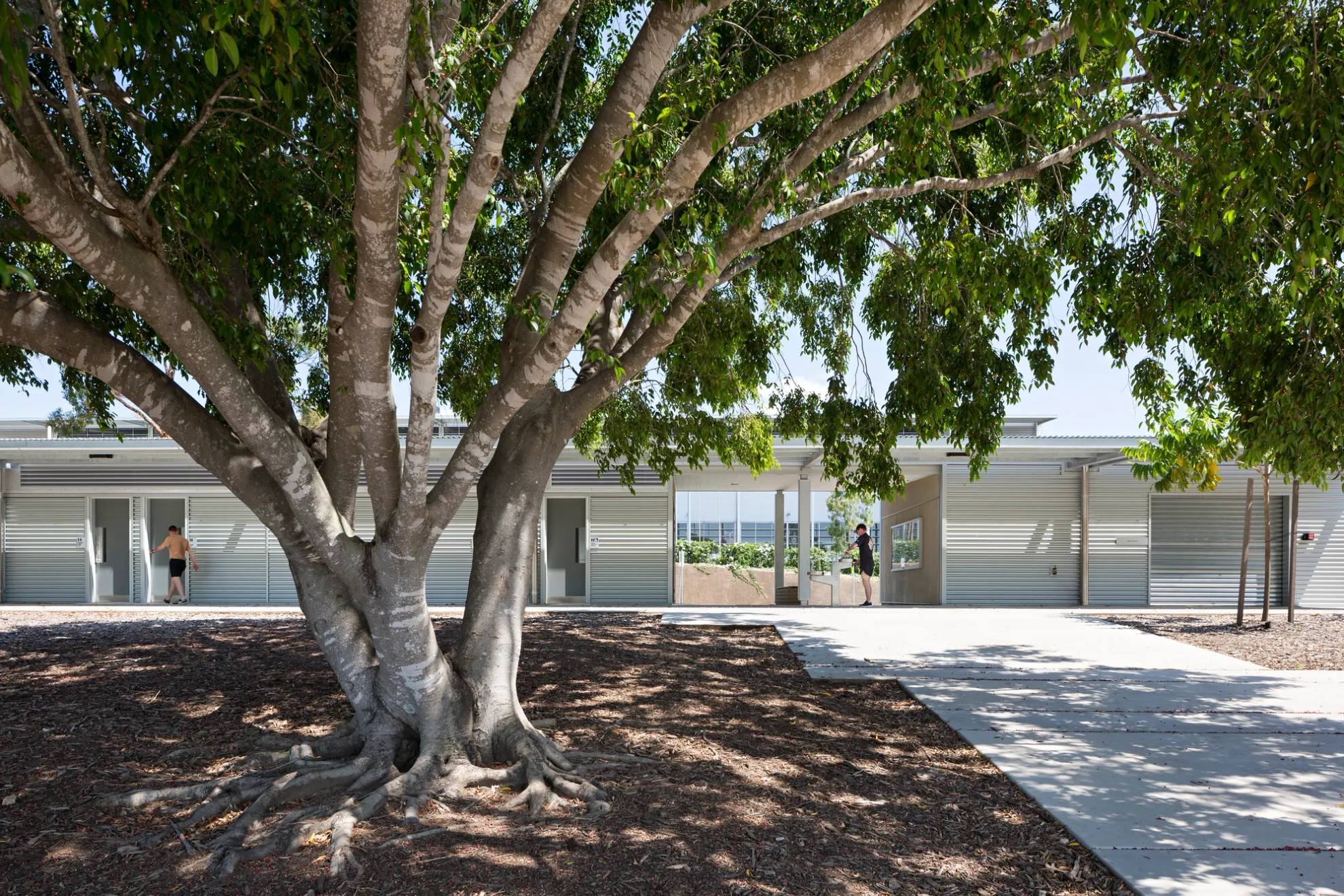
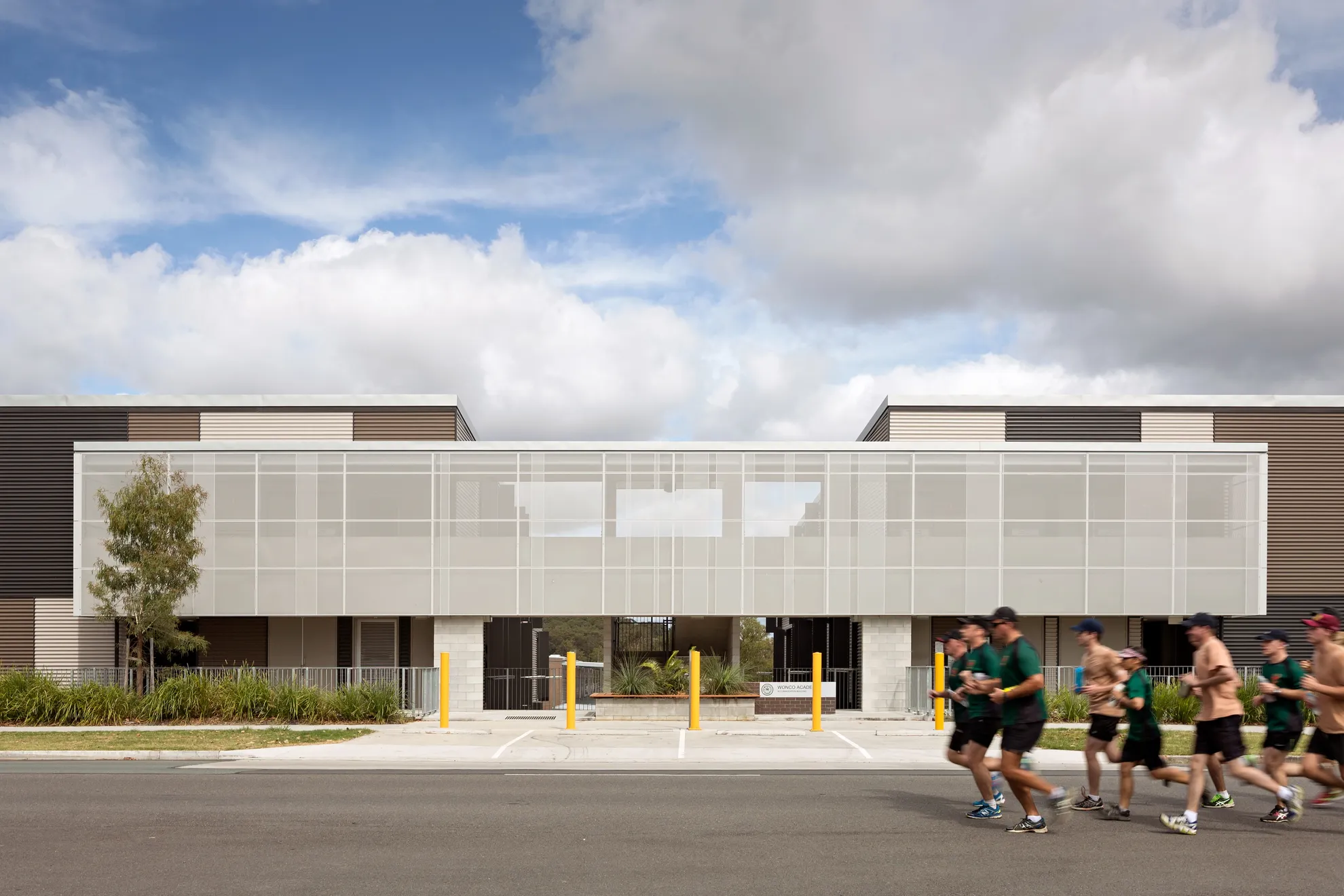
Available land at the Barracks was scarce, with the site rising sharply towards Enoggera Hill on the west and established residential areas on the other sides. Many older facilities and compound layouts were inefficient and unsuited to mechanised Army units, requiring a re-think of established defence base building typologies.
The new master plan involved widespread urban development interventions, realigning roads, consolidating car parking, relocating two major units and moving open space. Reconfiguration was achieved by creating five new precincts, each with a distinct operational purpose. Support buildings catering for physical fitness training, education, administration, recreation and childcare were woven into the new structure — central, legible and easy to access.
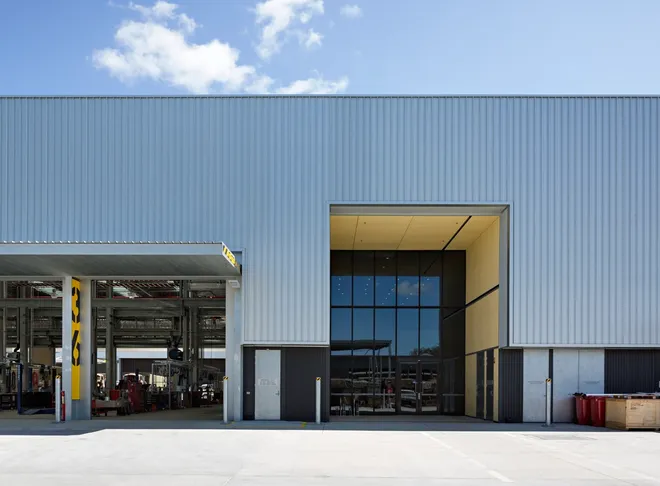
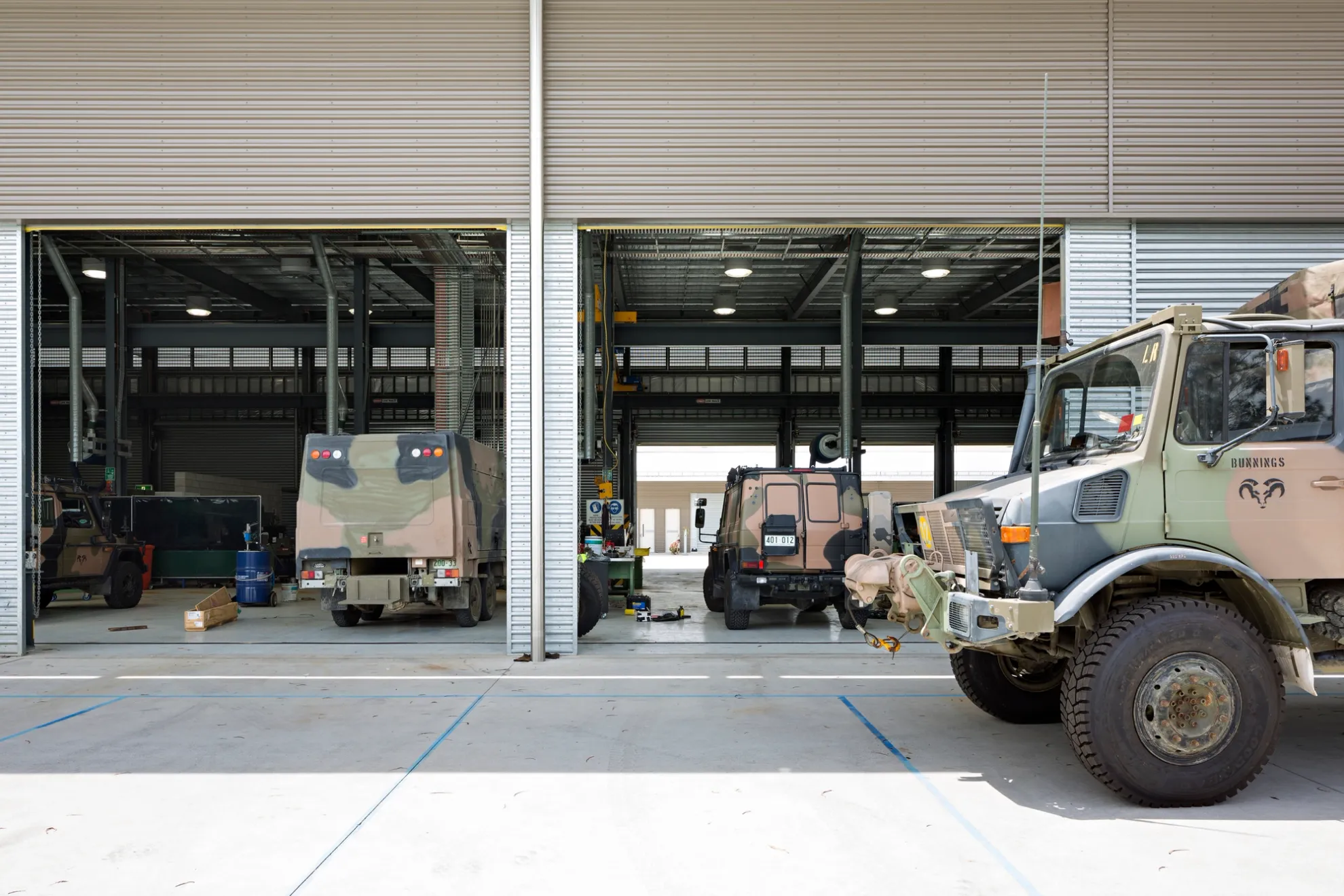
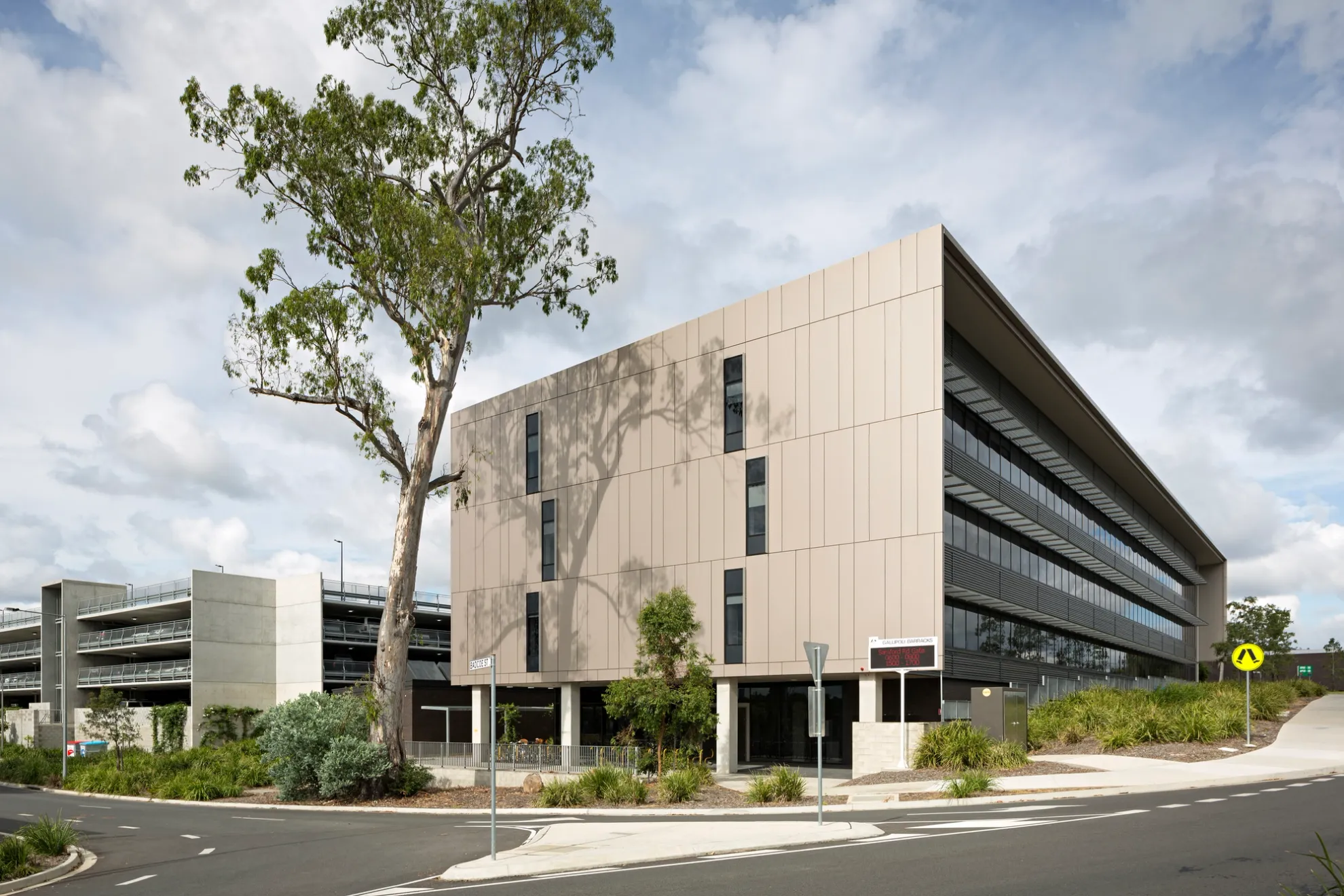
The need to manoeuvre and park large combat vehicles and the laydown requirements of training and deployment demanded expansive areas of hardstand. With restricted site area and a goal of minimising earthworks, elements such as Q stores, vehicle shelters, armouries and workshops were placed at ground level, with other functions above. Where possible, similar functions were consolidated and collocated into larger buildings and the sloping site was exploited to double-stack vehicle shelters.
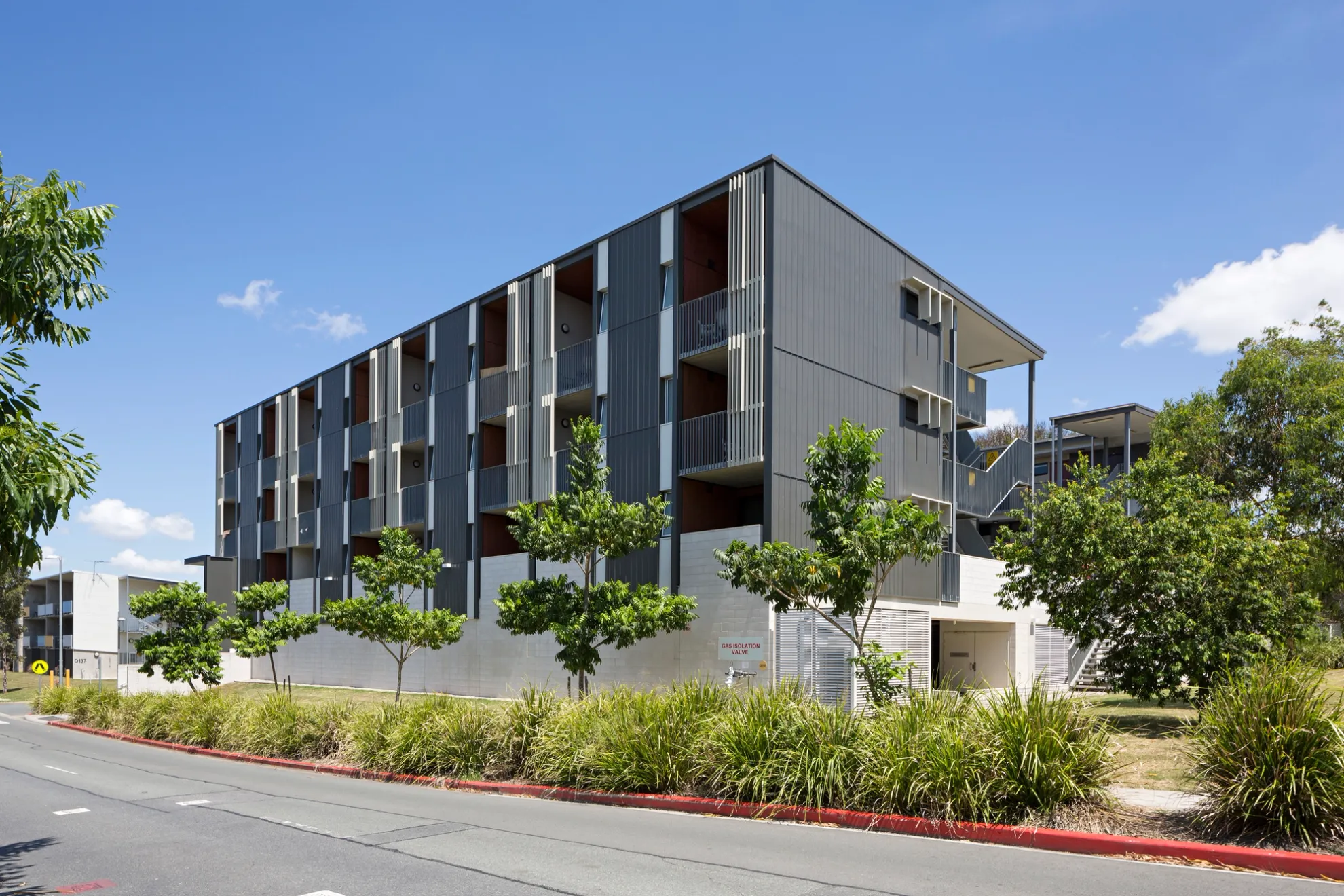
The central residential precinct 
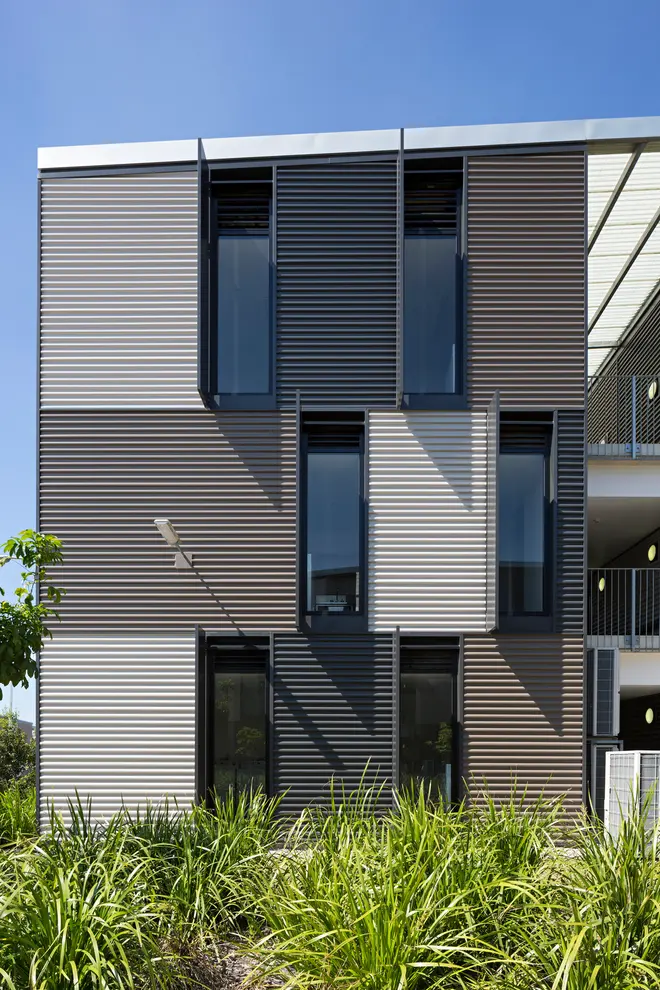
The scale of the overall redevelopment and the degree of repetition called for standardisation to ensure consistency and maximise adaptability. Modularity and a “kit of parts” approach was applied to structure, services and cladding systems – carefully controlled in terms of scale, proportion, composition, and tectonics. This simple and restrained approach elevates the architectural quality, resulting in a coherent family of buildings.
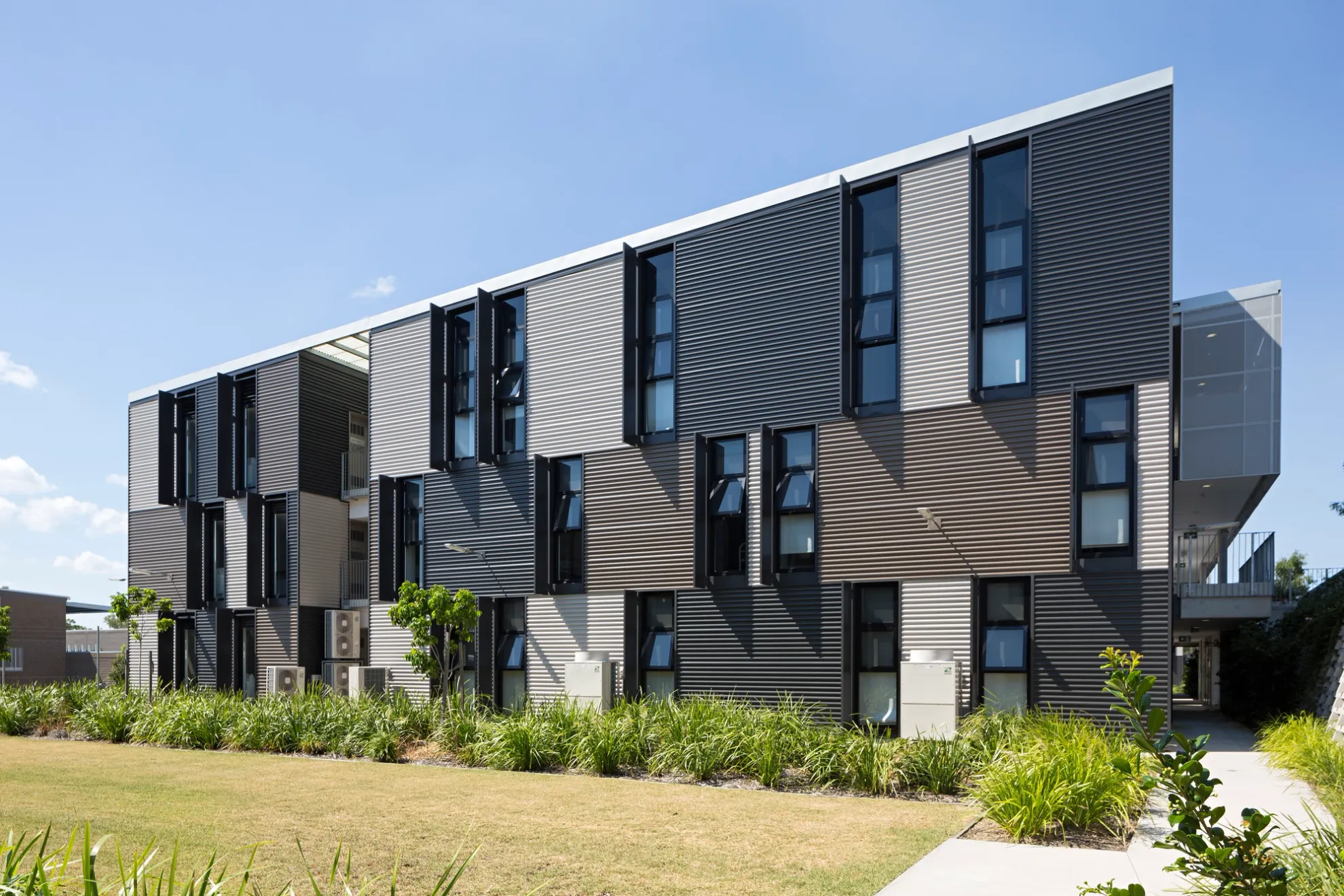
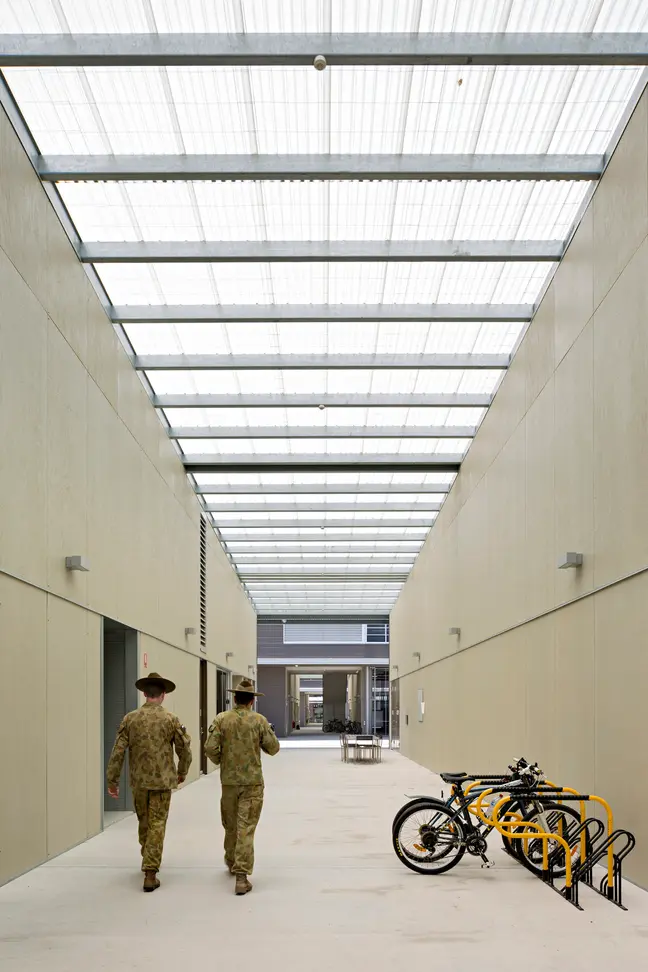
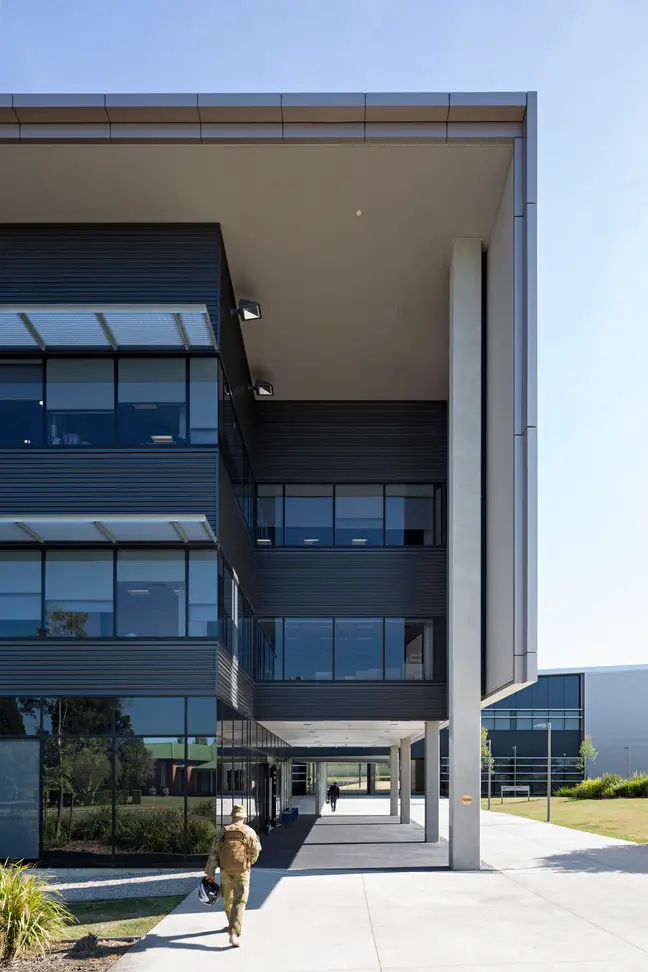
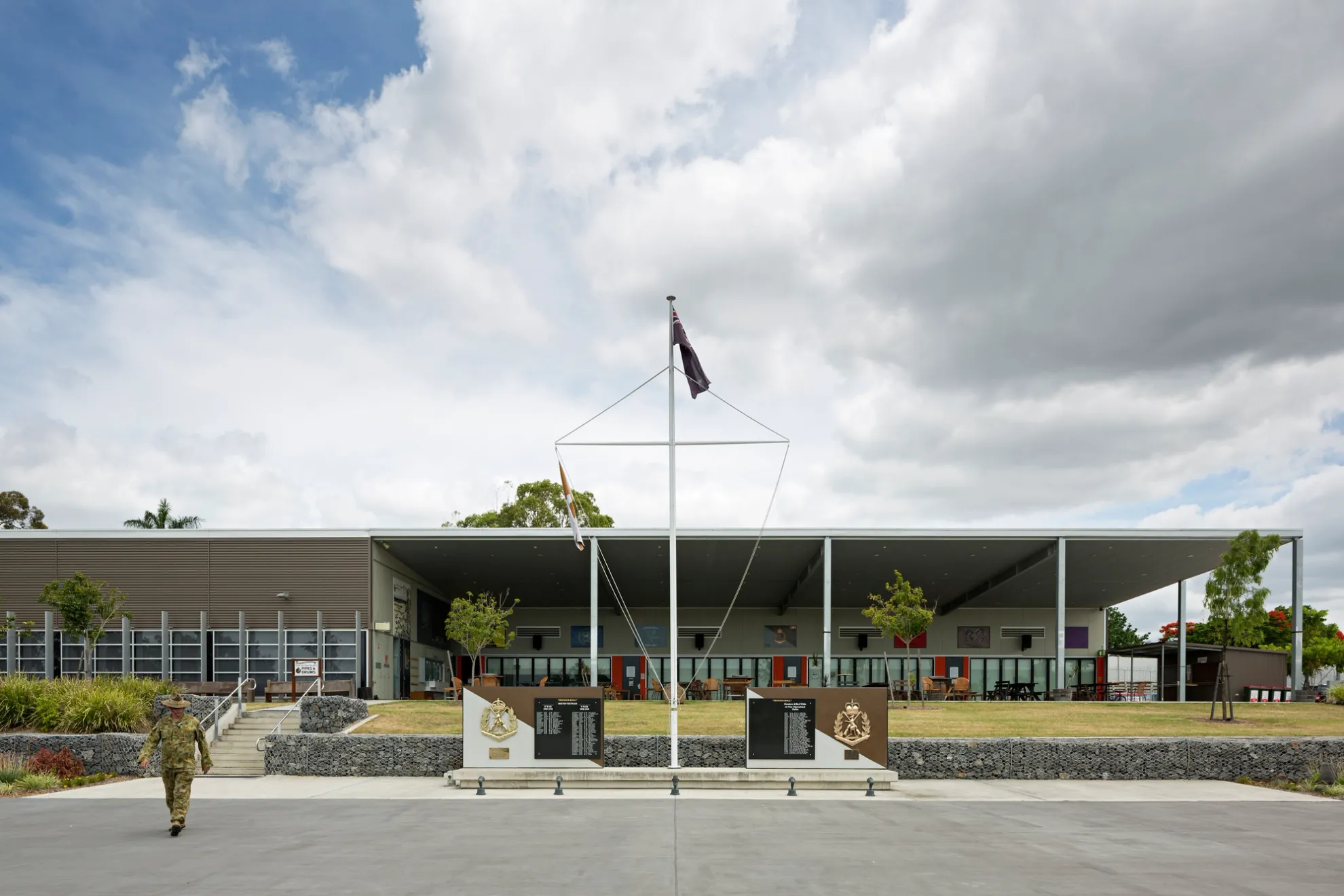
Even though budget dictated many material choices, brick and other textural materials were used to ground and humanise the buildings and tie them to the base’s history. Habitation of the base was also enhanced through the use of open breezeways and sun shading as well as clear and legible circulation between buildings and precincts.
The design team made significant expansion and modernisation of the base possible by efficient use of valuable land. Evolution of a new suite of streamlined and cost-effective buildings was informed by BVN’s previous defence base experience. A robust and consistent architectural vocabulary has given the base a new identity and established a strong sense of place and character.
Credits
BVN
Collaborators
Conrad Gargett (now Architectus)
Department of Defence
Consultants
Aecom, Aurecon, Aqualogical, Eric Martin & Associates, John Holland Group, Philip Chun, MPN Consulting, Cardno, Webb Australia Group, MoveCorp, Rider Levitt Bucknell
Collaborators
Conrad Gargett (now Architectus)
Department of Defence
Consultants
Aecom, Aurecon, Aqualogical, Eric Martin & Associates, John Holland Group, Philip Chun, MPN Consulting, Cardno, Webb Australia Group, MoveCorp, Rider Levitt Bucknell
Photography
Christopher Frederick Jones
Awards
2016 AIA QLD Chapter Awards, Regional Commendation, Public Architecture
2016 AIA QLD Chapter Awards, Commendation (Gymnasium & Pool)