Architecture
Environmental performance was the catalyst for the architectural expression of RAAF Richmond and the foundation of its sustainability credentials
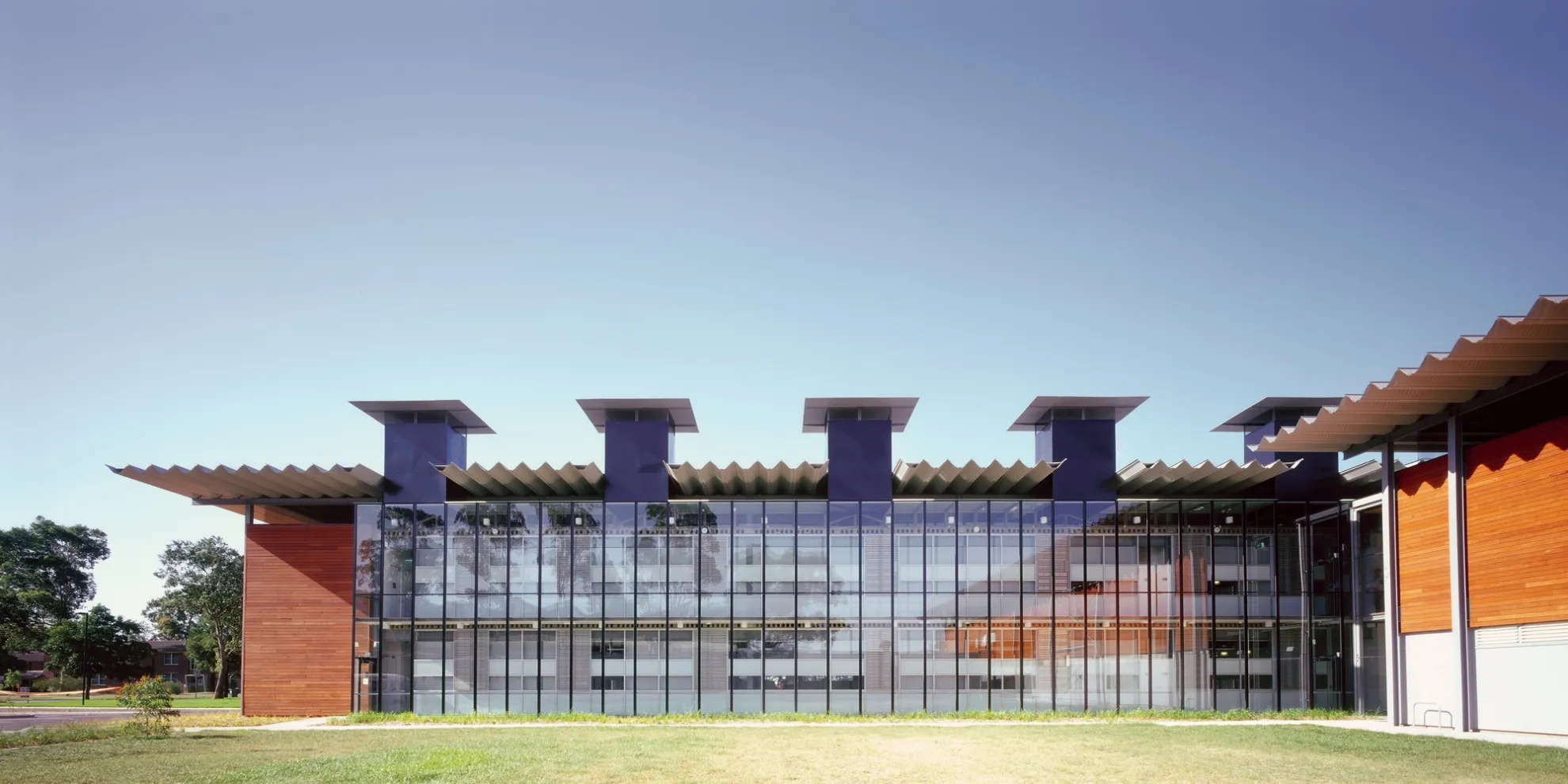
RAAF Base Richmond was established in 1925, on the lands of the Dharug people, 52 kilometres north-west of Sydney. The base plays an important role in supporting the air lift capability of the Australian Defence Force (ADF). In 2002, a project was approved to upgrade working accommodation, support facilities and engineering services across the base. The centrepiece of this was a new combined headquarters building for airlift Squadrons No. 36 and 37.
By 2003, the Defence Department had an established commitment to Environmentally Sustainable Design (ESD). It had been evolving its requirements over numerous projects, several of which BVN had completed in the eight years preceding. The brief for the headquarters set 5-star Greenstar as the target for Office Design, Office As Built (constructed building) and Office Interiors.
Emerging concepts in office accommodation, such as open plan, sharing of facilities and flexible loose-fit layouts, were becoming commonplace in Defence facilities. New projects were expected to incorporate these and navigate the cultural change of discarding long-standing practices.
BVN worked with the two squadrons to examine their protocols and operational space requirements, identifying that through sharing of certain facilities, use of hot desking and tracking of deployment absences, a 30% area reduction was possible.
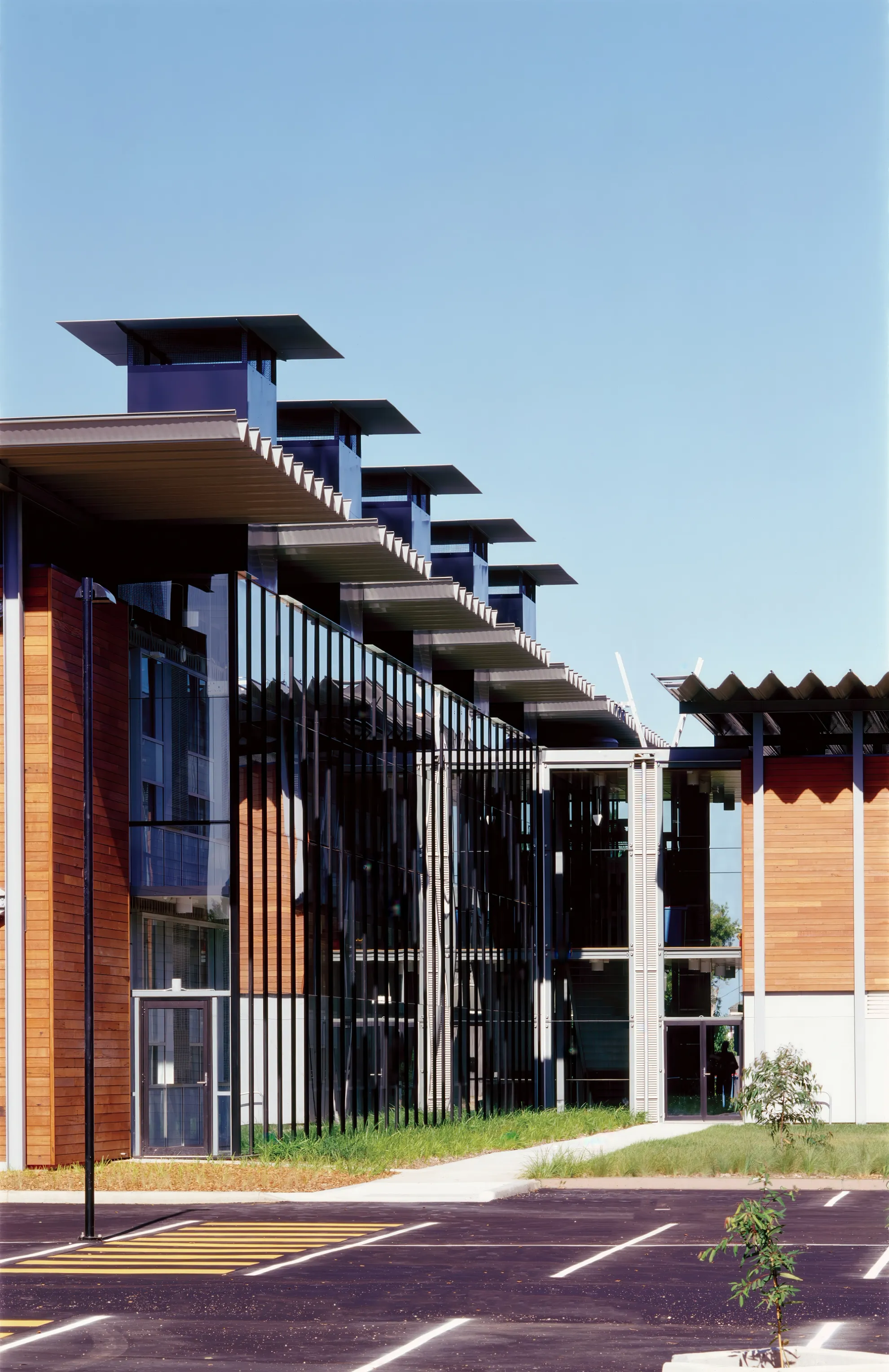
Functionality and orientation determined the layout of the building into three wings, arranged around a landscaped courtyard providing outdoor recreational space for the building users. The two main wings are at right angles, one facing north, housing permanent office accommodation for each squadron and the other facing east containing shared facilities. A third smaller wing completes a U-shape and contains stores and an external plant room.
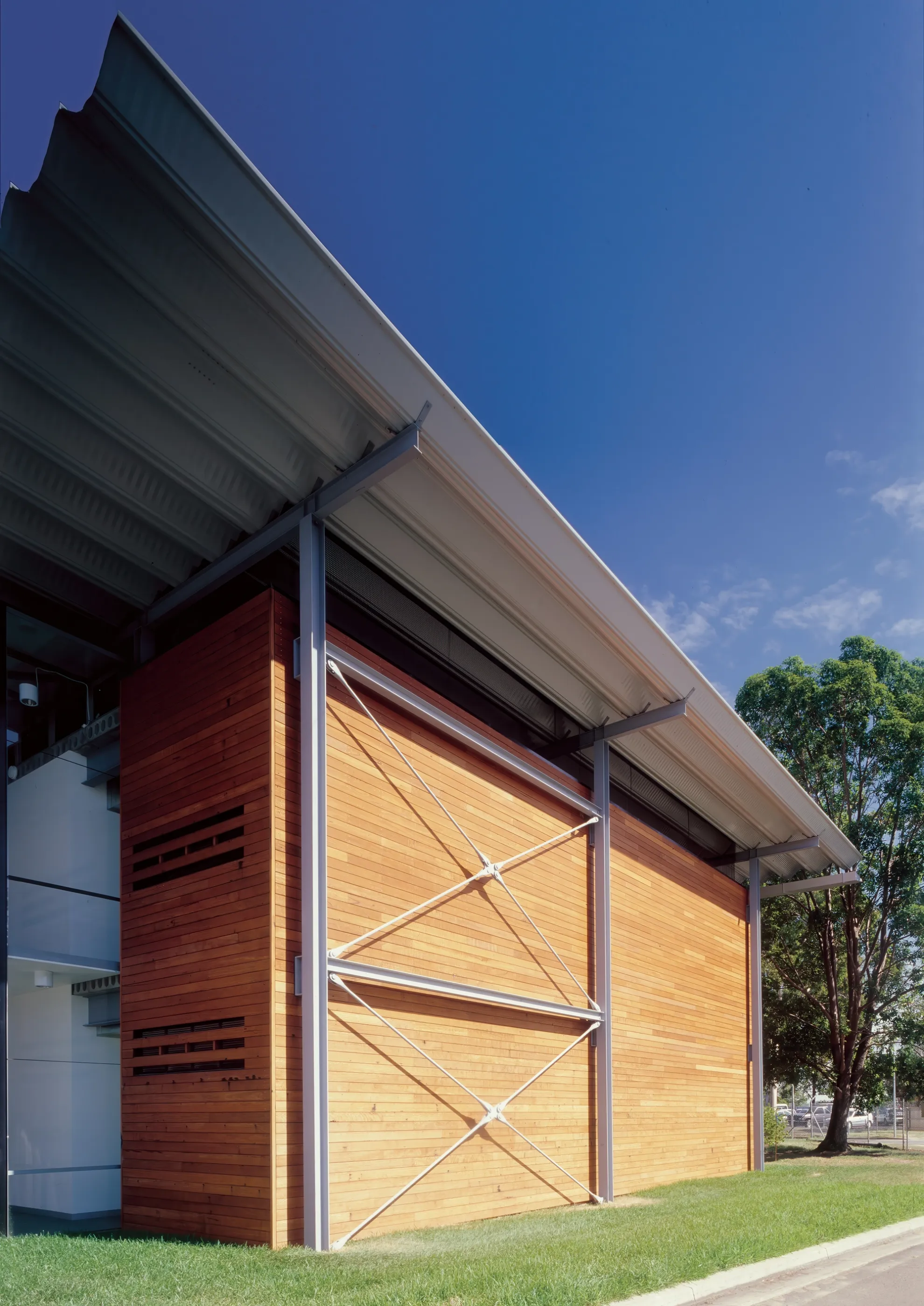
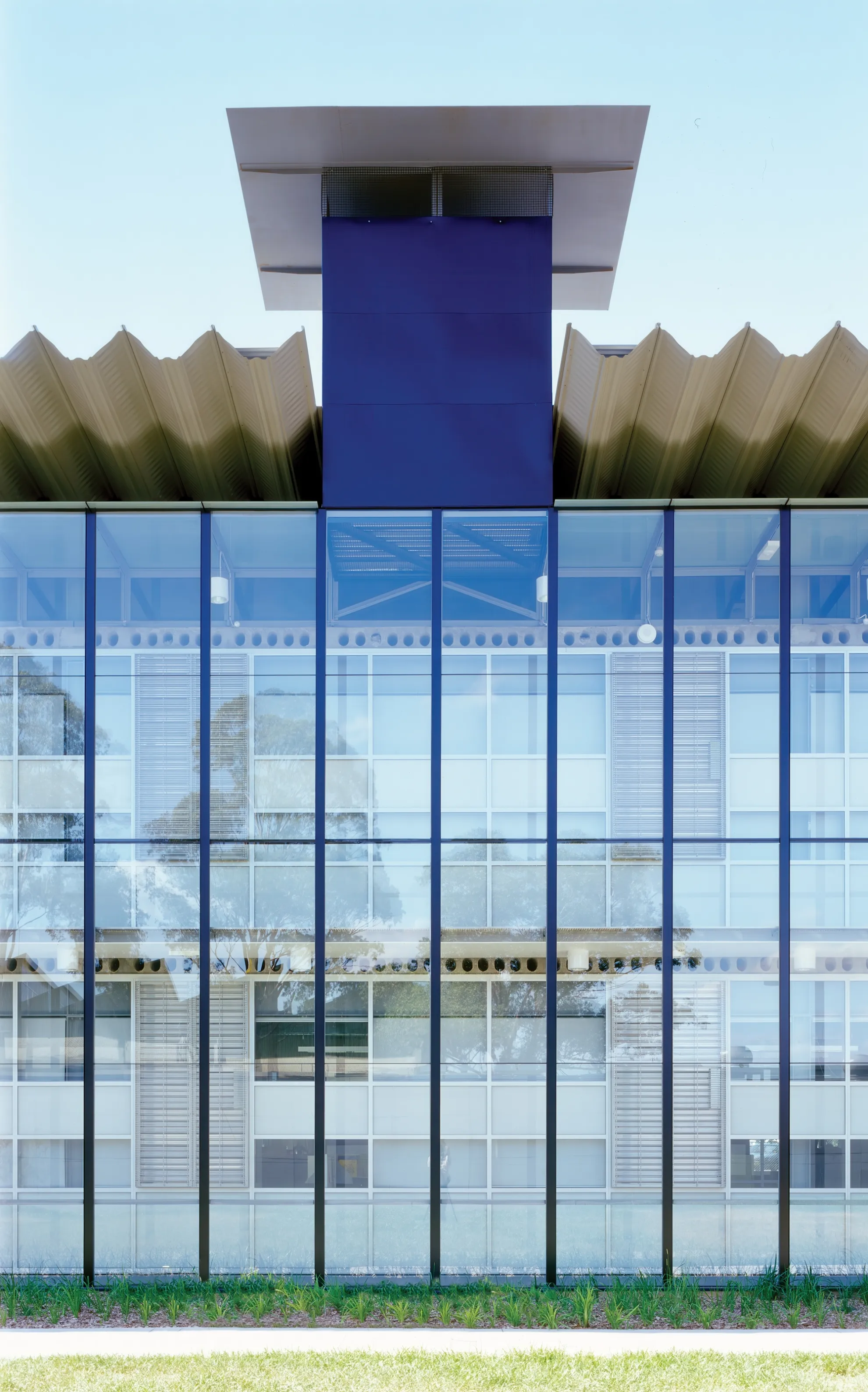
Facades are composed of simple solid forms clad in either recycled blackbutt or glass. The exposed lightweight structure, fly roof and dominant thermal chimneys provide a visually rich composition. The inner workings of the building are conspicuously on view, allowing for a legibility and honesty of expression appropriate to the project’s environmental aspirations.
To achieve the 5-star rating, advanced engineering features were incorporated to provide automatic sun protection, enable user control of multi-mode ventilation and minimise water usage while maximising daylight penetration. Sensor-controlled components reduced energy consumption to easily satisfy the 5-star criteria.
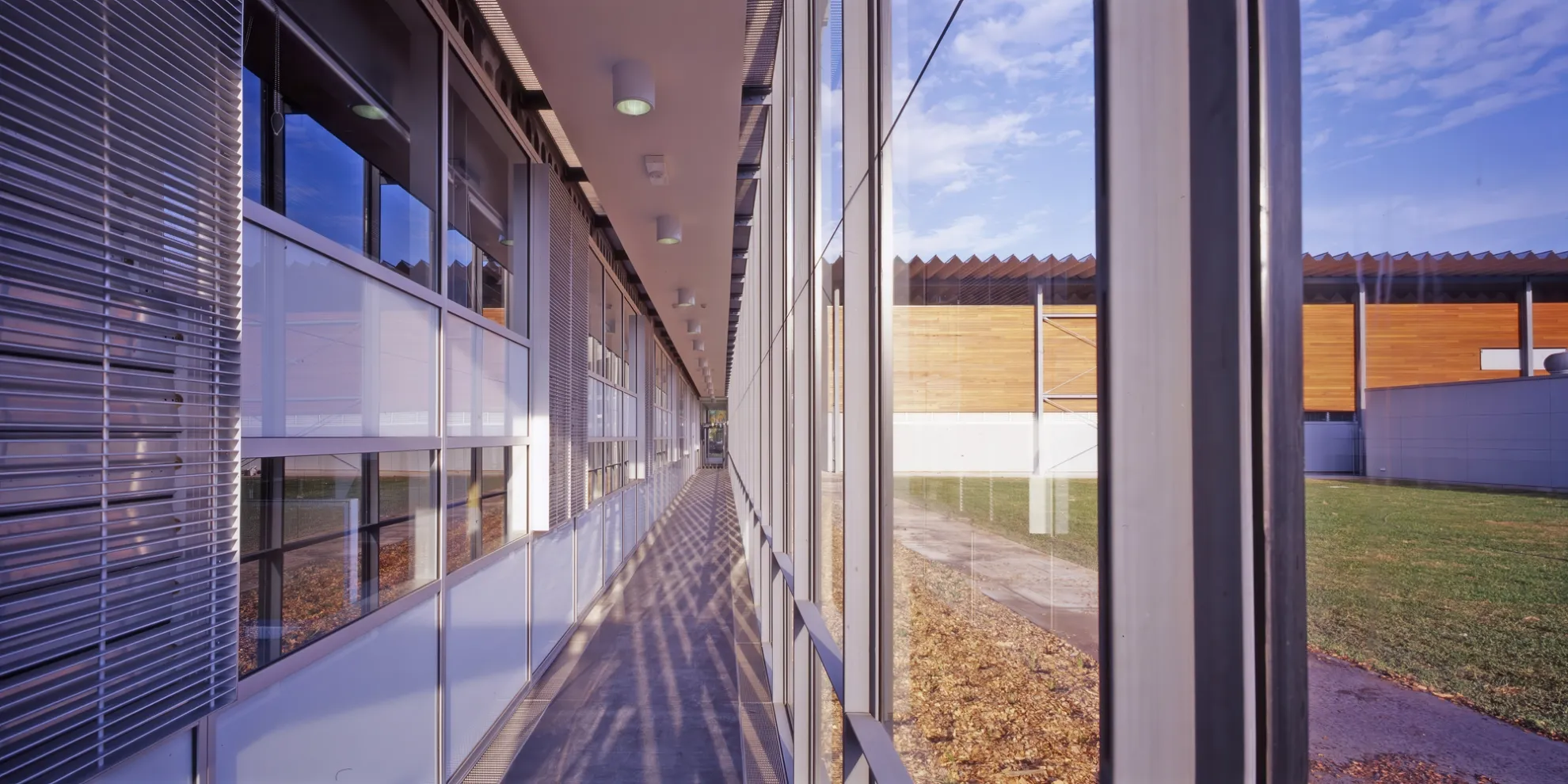
Working closely with the builder, the construction method was scrutinised and tuned for speed of erection, easy disassembly and future flexibility whilst minimising on-site finishing trades. Greenstar points were gained through this process by minimising environmental impact and recycling of waste.
The project was the first in Australia to be awarded a 5-star Green Star rating in all three targeted categories.
This provided Defence with a body of research and test cases which were used to guide its approach to ESD on new projects. Twenty-five years later the building continues to provide a benchmark and perform to its own high standards.
For security reasons the headquarters are invisible and inaccessible to the larger public, yet they are a model for integrating environmentally sustainable ambitions within the brief. and resolution of a publicly funded project.
Sitting within a campus of mixed building stock, much of it driven by expediency, the building provides a level of architectural amenity not found elsewhere on the grounds. It achieves this with a dignified and broadly scaled exterior and a lean interior.
This building is a model of responsible architecture wherein its sustainable ambitions are fully integrated with its formal qualities. It is a mature and holistic solution to a range of diverse programmatic, landscape and environmental challenges.
AIA Jury Citation
The Sulman Award for Public Architecture affirmed the power of team-wide enthusiasm for the project’s goals and commitment to design excellence. The jury called the project "a model of responsible architecture wherein its sustainable ambitions are fully integrated with its formal qualities".
Credits
BVN
Photography
Brett Boardman
Awards
2006 Australian Institute of Architects (NSW) Chapter Awards, Award for Sustainable Architecture
2006 Australian Institute of Architects (NSW) Chapter Awards, The Sulman Award for Public Architecture